
The Loveless
a serial story, Part I

Because my new book will be the last of the memoirs and because I’ve been itching to write fiction, I’ll start here, with a serialized story that just may become a novella. I hope you enjoy it. Part II will be for paid subscribers only. Yes I’m trying to hook you! And please look out for my newest book, NO NEW YORK: A Memoir of No Wave and the Women Who Shaped the Scene.
Here we go!
Naples, 1965.
Aldo cleaned his brush of vermillion, then chose a size 002 for the Verderame. Green. Like the smoke long settled in her brown eyes.
His pigment analysis detected green in the robes of the weeping woman, now degraded to an olive brown. This was his first painting by Guido Reni, ‘The Penitent Magdalene’. Cimabue’s Santa Croce crucifix had been his most challenging. The next day, he would board the train to Brussels to restore a van der Goes. He found van der Goes figures strangely unsettling, but his friends were anxious to host him, it was time to leave Naples, and he needed the work. His bags were packed. In the morning, he would say goodbye to his nona, Gelsomina.
Aldo D’Aquisto traveled throughout Europe as a well-known restauratore di dipinti. A minor figure in the Neapolitan art world, he was suspicious of the circle’s elitism and preferred the company of the working class: the partisans, the poets, the dreamers. Aldo was affable and charming, known to acquire friends easily and to drop them at the first hint of dishonesty or cowardice.
Throughout his travels, friends scattered across decades and countries always welcomed him into their homes. The Dutch chose him over their own restorers who were overcleaning with more modern chemical solvents. In France, his techniques for removing yellowed resins and detecting original pigments were in demand. Aldo’s vocation was to uncover what had been obscured.
Aldo’s parents had been partisans. In the 1943 uprising in the Piazza San Gaetano his nonna cursed the Nazis and Aldo dragged her off before the Panzer division could detect the direction of the vilest of her curses. He pulled her to the barricade the partisans had set up, of autos and crates and carts filled with garbage.
It began with hands. Nazi hands, pushing up the dress of his nine-year-old sister Assunta. Aldo’s mother Bettina flew at them. Kicked one hard in the groin, grabbed Assunta and ran.
To the bell tower of San Lorenzo Maggiore.
She rang the bells. The bells! Pulling the rope like a woman possessed, which is what they had always called her... pazza, crazy Bettina... and the bells rang out over Piazza San Gaetano and more and more people came, as people do when the bells will not quiet.
The soldiers dragged Bettina and Assunta from the bell tower. The crowd circled, helpless against the bayonets, the MG 42s, the Walther pistols. They watched as the Nazis tied Bettina to the statue of San Gaetano, the metal saint with useless arms outstretched toward his people. A Nazi opened a can of gasoline.
Bettina did not beg. She wailed for her children and cursed fascist scum and raged that she would rather die on her feet than her knees as the flames took her.
Aldo’s father Marco came running into the square. Time stopped when he saw his wife burning. Then, he walked toward her. Making a sound deep in his throat that no one could hear, Marco approached the gasoline soldier from behind, took out his pistol and pressed it to his temple. Before he could pull the trigger, the machine guns opened and Assunta, running toward her father, was caught in the crossfire.
Aldo’s hands covered his nonna’s eyes as he watched from a garbage cart. He was seventeen years old.
Aldo grew tall and lanky, with sad liquid eyes and a smile that could change weather. Studious and sensuous, he chose books and art over the pursuit of love, though love pursued him. Aldo was a farfallone, a big butterfly, a player. Women flocked to him the way they flock to a man who has no need to diminish them. In him there was no appetite to make a woman feel small so he could feel large, no desire to control or laugh at, or command. No wish to dominate, other than in the deepest of private moments.
Women came and went from Aldo’s life like tides, most warmly and without bitterness. His body was never lonely. But the heart waited.
It was known that Aldo had the sight. Not something he’d admit to when asked, he’d laugh it off, embarrassed. His nonna knew this early on when Aldo was a boy. He had predicted the eruption of Vesuvius in the last year of the war. Everyone knew it was Aldo who whispered to a lover that Maria Elena would give birth to a boy with a defect. That a thunderstorm would rage over Naples on a certain date, at a certain hour. That Bruno the Butcher was cheating on his woman with a man, and a new era of prosperity was coming to Italy. Passing from one woman to another, the news of his clairvoyance and precognition spread, forming a mystique he wore like an ill-fitting jacket.
The sight branded him with a power other men grudgingly respected and women were drawn to. He possessed a quiet, formidable strength, yet his appearance was nearly feminine. And no man ever dared mention it.
The sight allowed Aldo a practicality of seeing beyond the veils of oxidation and residue in the paintings to the true pigments beneath. Sometimes previously unseen images in a painting would be revealed under his hands, as in pentimento. His brush touch was meticulous, almost impossibly delicate. Under the tutelage of Maurizio Cecchi, he became the youngest and most sought-after restorer in Naples, then northern Italy, then France, Holland, and Belgium.
When he turned thirty six, the desire to lay with women left him altogether. He craved solitude. There was a wanting in him so large he’d learned to look away from it. Days spent restoring frescoes in churches whispered to him of a sacred contract that seemed to remain infinitely beyond reach. Of all the women he’d known, he had been looked at by many and seen by none. The acts of love were rousing yet loveless.
He would sit at a table on the dehors of Cafe Gambrinus after work and watch the women go by, his gaze appreciative. When returned, he’d avert his eyes.
The heart waited.
Every evening after work Aldo walked through Piazza San Gaetano on his way to the market. He had walked through it thousands of times... knew the particular slant of late light across the stones, the way the statue of the saint held out metal arms to the memory of fire. He knew not to linger. He bought his vegetables and fish and walked home by a different route.
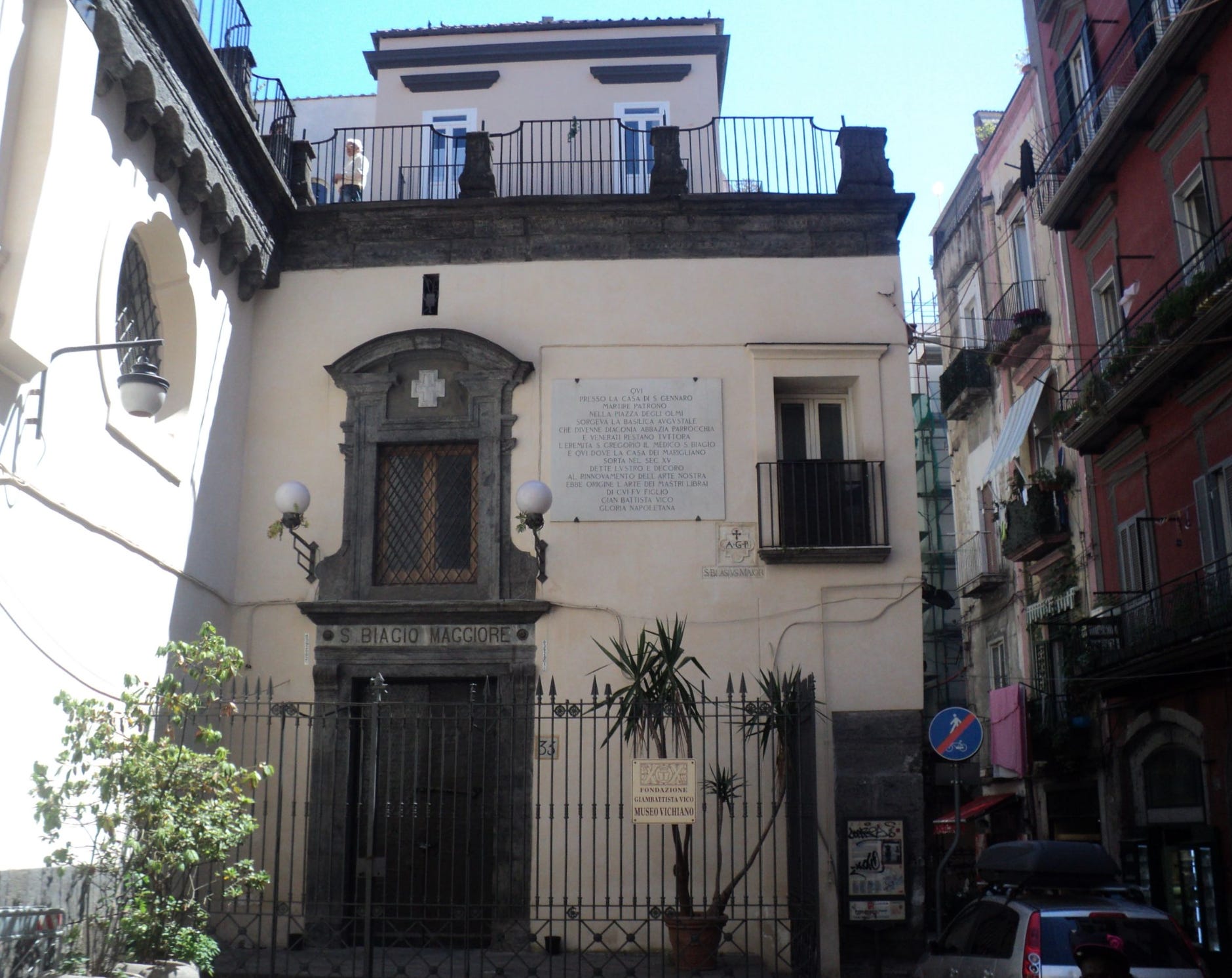
One evening in April a window was open in the small church on Spaccanapoli, a chiesa so small and unassuming he had passed it without thought for years. He heard music. Inside the church, stringed instruments were rehearsing a piece he didn’t recognize, a complex piece that seemed to be searching for a resolution it couldn’t find.
Aldo stopped.
He stood on the pavement outside the open window with his vegetables and his fish and listened until they finished. Then stood a little longer in the silence after.
A woman emerged from the chiesa carrying a violin case. She paused, seeing him there. Neither spoke. Something in her went very still, the way animals go still before weather. Aldo had the feeling, absolute and inexplicable, that he had been standing on this particular spot at this particular hour his entire life.
What is... the piece of music you were playing?
She could hardly form words.
Verklärte Nacht.